
I have some good friends whose families are Filipino. And although for some time, my friend Ethel has threatened to kidnap me and take me to Queens for some Filipino restaurant food, we haven’t made it yet. Come to think of it, there are far more Korean and Thai and Vietnamese restaurants all over the place than there are Filipino. And until this dish came along, I’d never cooked anything from there. But this stir fry is well worth making for its subtle fresh flavors. It’s absolutely not hard to make at all. There’s just some dicing and chopping and you’re good to go. And you certainly don’t need a wok; You can easily use a big non-stick frying pan like I did. For those of you averse to heat or feeding young children, this is a really wonderfully mild dish that no one’s going to find too spicy.
Filipino cooking is all about combinations of sweet, sour and salty generally combining all three in one dish. However, it is not heavily spiced. I even had to send the recipe to my friend Ethel to see whether there was any chance I’d left something out or that the recipe had been spiced down for the American palate. No, she said. It was very much on the lines of what her grandmother prepared on her last trip to the Philippines. I found this quite amazing given that Hispanic, Chinese and other Asian cultures have all influenced Filipino food. The earliest Filipinos came from Southern China and Taiwan. Trading with other Asian countries led to a lot more blending of cuisines. It was the Spanish who brought chili peppers and tomatoes into the Phillipines. But even then, the peppers were frequently used just for their leaves and not for their punch. After the Spanish established themselves, there was an even greater influx of ethnic Chinese. In fact, Chinese food became the staple of the panciteriasor noodle shops that burst onto the scene in the 19th century. The recipe I am sharing with you today could have come right from a panciteria. It even gets its Filipino name from there: Pancit.
Pancit is probably one of the best known Filipino dishes. But Pancit has about as many recipes as there are Filipino cooks. This one, from a marvelously instructive cookbook called “The Asian Grandmother’s Cookbook” by PatriciaTanumihardja (Sasquatch Books, 2009) uses both Rice noodles and and Chinese wheat noodles. But if those aren’t readily available you can use flat egg noodles and cellophane noodles which are relatively easy to find if your supermarket has an Asian aisle. Here’s the recipe:
Recipe for Pancit, Filipino Fried Noodles
 |
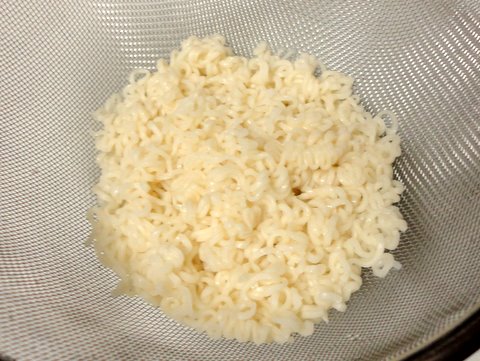
| Rice Noodles |
8 oz dried vermicelli (rice noodles) (1/2 package)
 |
| Chinese Wheat Noodles |
8 oz pancit canton noodles (you can also use Chinese egg noodles)
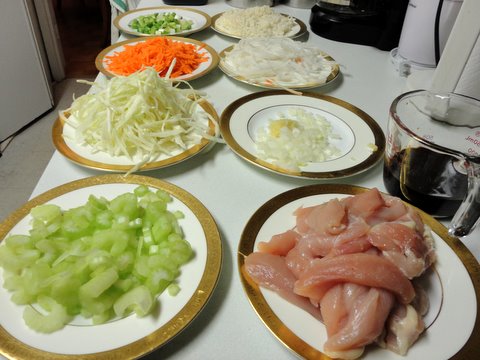
2 tablespoons vegetable oil (I like canola)
3 cloves garlic, minced
1 small onion, chopped finely (about 1-1/2 cups)
1 pound chicken breast or thigh, cut into bite-sized pieces
1/4 cup toyomansi (if you don’t have toyomansi, use 1/2 cup soy sauce and squeeze in 1 to 2 tablespoons of lemon or lime juice to taste)
1/4 cup soy sauce
1/2 head small cabbage, shredded (about 4 cups)
2 large carrots, peeled and shredded (about 1-1/2-2 cups)
2 stalks celery, trimmed and chopped
2 stalks green onions, cut into ‘O’s (optional for garnish)
3 cloves garlic, minced
1 small onion, chopped finely (about 1-1/2 cups)
1 pound chicken breast or thigh, cut into bite-sized pieces
1/4 cup toyomansi (if you don’t have toyomansi, use 1/2 cup soy sauce and squeeze in 1 to 2 tablespoons of lemon or lime juice to taste)
1/4 cup soy sauce
1/2 head small cabbage, shredded (about 4 cups)
2 large carrots, peeled and shredded (about 1-1/2-2 cups)
2 stalks celery, trimmed and chopped
2 stalks green onions, cut into ‘O’s (optional for garnish)
Soak rice noodles in warm water for 10-15 minutes until soft, then cut into 4-inch lengths. Place the egg noodles in a large heat-proof bowl. Pour boiling water to cover. Let stand 1 minute. Drain and set aside.
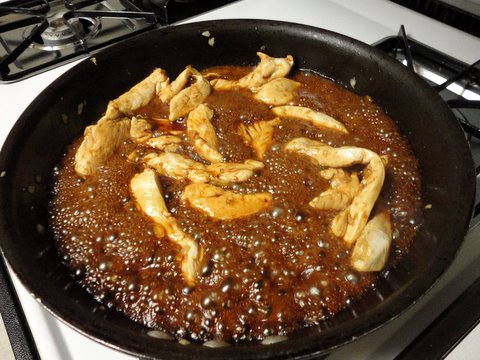
In a wok or large skillet, stir fry garlic and onions in oil until fragrant and onions are translucent, about 2 minutes, over medium-high heat. Add chicken and fry until no longer pink. Add toyomansi and soy sauce. Toss to coat chicken. Add vegetables and stir fry until cabbage wilts.

Add noodles and keep stir frying until well coated and heated through. I know it looks very unprofessional but I recommend using the two-handed method to evenly toss the noodles like below.
Add water or stock a few tablespoons at a time if noodles are looking too dry. Test rice noodles for doneness. Scatter green onions for garnish and serve.







Quality posts is the secret to attract the viewers to go
to see the website, that’s what this web site is providing.
It is not my first time to pay a visit this site, i am visiting this website dailly
and get nice information from here every day.
Every weekend i used to visit this website,
for the reason that i wish for enjoyment, as this this web page
conations really nice funny stuff too.
Please let me know if you’re looking for a writer for your
site. You have some really good articles and I think I would be a good asset.
If you ever want to take some of the load off, I’d really like to write some articles for your blog in exchange for a link
back to mine. Please shoot me an e-mail if interested.
Cheers!
I am not but thanks for the complement.
I go to see everyday a few sites and information sites
to read articles or reviews, but this website presents quality based content.
Awesome post. I am a regular visitor of your site and appreciate you taking the time to maintain the nice site. I will be a frequent visitor for a really long time.
http://www.charlestonstateuniversity.com/
Dear Joel, How very kind of you to write. I really appreciate your taking the time and it gives me a great deal of satisfaction to know that there are people like you from all over the country–and all over the world in fact–who come to Chewing the Fat. Please don’t hesitate to write again and if there’s anything you’re like to know, or have a question about, I will be delighted to answer. I think you are going to like tomorrow’s post…it’s from neighboring North Carolina! All best, Monte