 |
| Chinese Symbol for the Year of the Dragon |
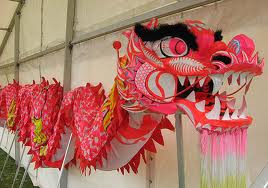
January 23rd is the start of Year of the Dragon, which, according to the Chinese Zodiac, is an extremely auspicious sign. Coming along once every twelve years, it is the ultimate symbol signifying success and happiness. And if that isn’t a reason to celebrate its arrival, I don’t know what is. In China, it is a 15-day celebration, the longest of any in the Chinese calendar. The entire country goes on holiday at least part of the time. Everyone tries to return to their villages and the trains, buses and planes are unbelievably packed with people.
 |
| These are just the ticket lines in China at New Year’s– the trains are just as packed. |
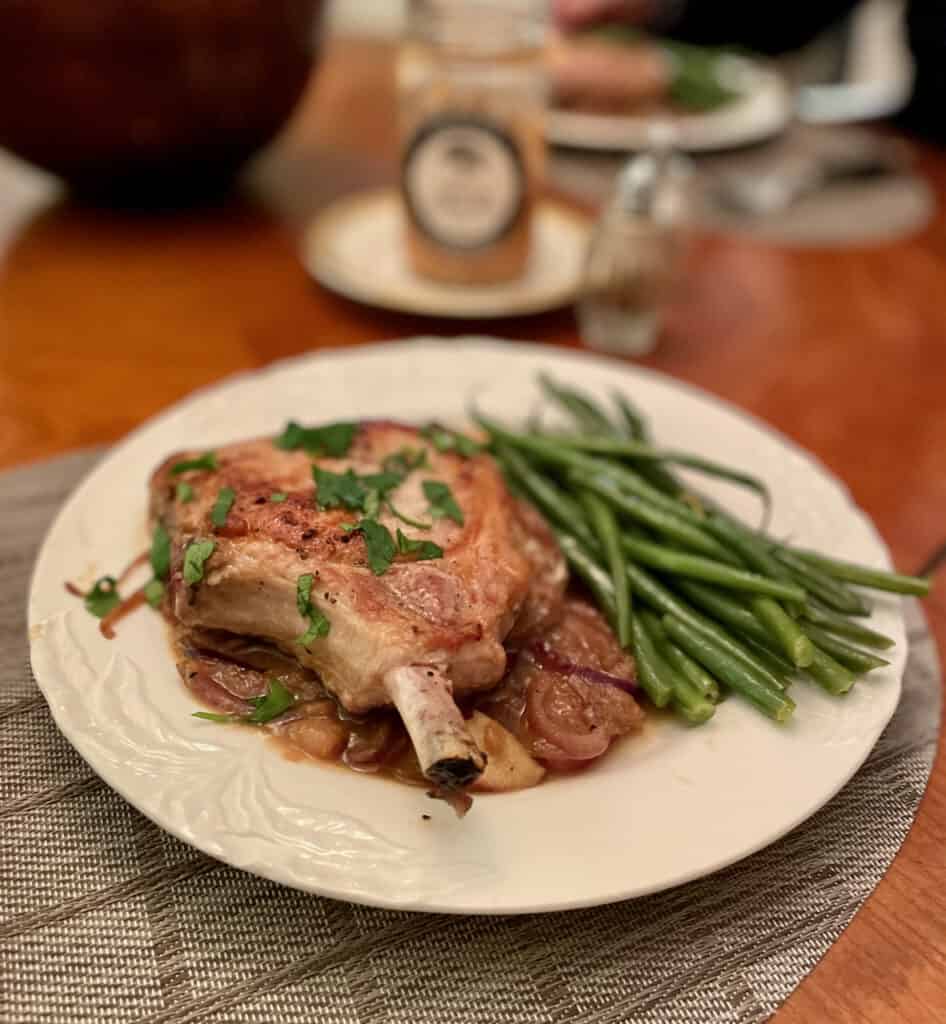
I’d suggest staying home, cooking this wonderfully Asian accented Roast Chicken, pairing with some Baby Bok Choy and rice and toasting the New Year with a good bottle of fruity white wine like a German Reisling, an ideal pairing with Cantonese cuisine which is what this chicken recipe represents. And there’s even good luck involved in serving this dish for New Year’s.
 |
| Bea Yin Lo of Rasa Malaysia |
There’s a wonderful blog I follow called “Rasa Malaysia”. It’s presided over by a very beautiful Malaysian woman named Bea who now lives in Orange County CA. Bea has one of the most popular Asian cooking blogs on the web. She has a broad sweep of recipes from all over Asia. (Read her blog www.rasamalaysia.comand you’ll see what I mean.) Bea is pulling out all the stops for this lunar New Year. She’s put together an entire feast of recipes but she’s particularly keen on Chicken. Bea writes: “Chicken is a must-eat during Chinese New Year. Whole chicken is especially auspicious and it’s prepared for prayers to the ancestors in traditional Chinese homes. While regular boiled or steamed chicken is a common dish to serve, I’m partial to roast chicken, especially Cantonese BBQ style. My roast chicken is the kind you would get at Chinatown. There are certain techniques and secret ingredients involved to get to the desired taste and texture. I marinate the chicken overnight, and then air dry it for a few hours before roasting. I also created a special concoction for the skin to ensure crispiness. The best part of the roast chicken is the juice seeping out during the roasting process; drizzle the juice on steamed rice while you sink your teeth into the moist and tender pieces of chicken. This Chinese-style roast chicken is simply delicious and imparts the signature “烧腊” (Cantonese BBQ) aroma and flavors.”
So this roast chicken is not your thirty minute dinner dish. It takes its own good time absorbing flavors from its marinade overnight, then on cooking day, basted and dried, scalded in hot water to assure that crispness Bea favors, then triumphantly roasted, emerging looking like it’s come straight from Chinatown! Shaoxing wine was readily available at my liquor store. It’s very inexpensive so you won’t feel so badly about the minute quantities you need for this recipe. The Bok Choy is a very easy recipe you’ll find after the one for Roast Chicken. Enjoy these wonderful dishes and “May the celestial Dragon bring good luck to everyone”.
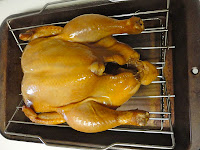
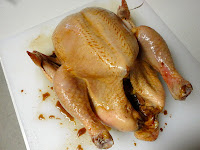
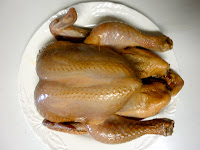
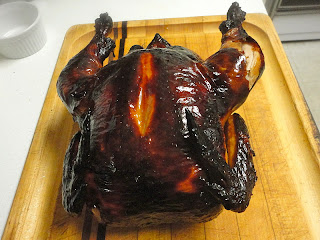
Recipe for Chinese-style Roast Chicken from Rasa Malaysia
Ingredients:
1 chicken, about 2 1/2 – 3 lbs
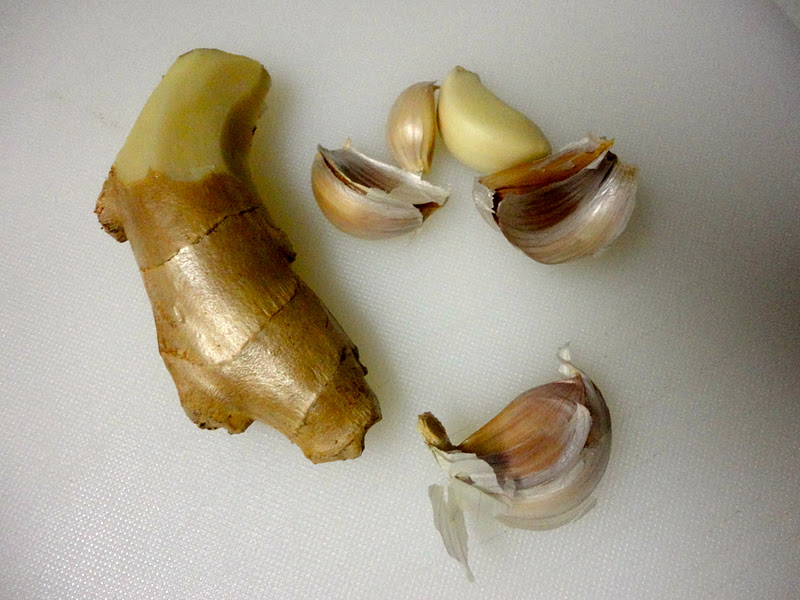
4 garlic cloves, lightly pounded
1-inch piece ginger, peeled and sliced

For the Marinade:
3 tablespoons soy sauce
1 1/2 tablespoons honey
1/2 teaspoon Chinese five-spice powder
1/2 teaspoon Chinese rose wine (or Shaoxing wine)
1/2 teaspoon sesame oil
1/4 teaspoon salt
3 dashes white pepper

For the Skin Coating:
1 tablespoon Chinese rice vinegar (clear in color)
1/2 teaspoon honey
1/4 teaspoon Chinese rose wine (or Shaoxing wine)
Method:
Clean the chicken with water and pat dry inside and out. Truss the chicken. (I did only the legs part and not whole body.)
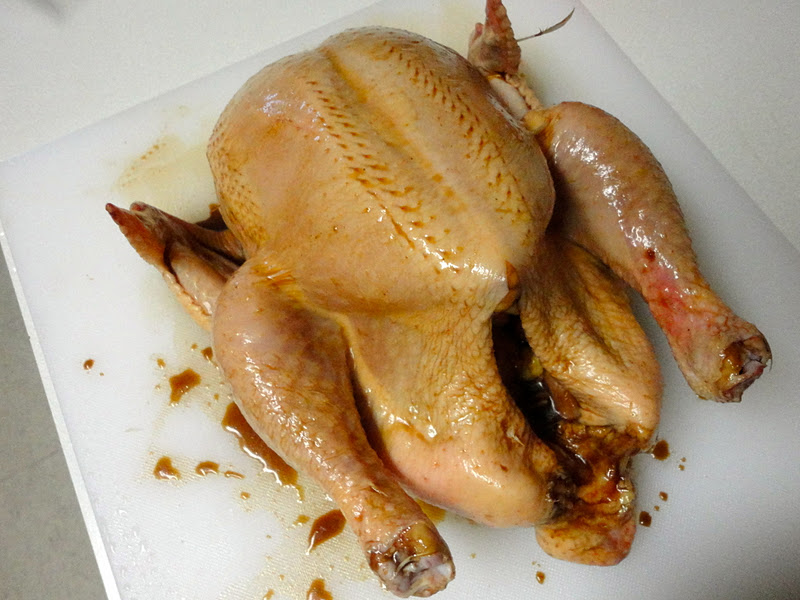
Mix the Marinade ingredients well in a small bowl and rub it generously on the skin of the chicken and also the cavity. Insert the garlic and ginger inside the cavity and then transfer it into a Ziploc bag. Pour the remaining Marinade into the bag and marinate the chicken overnight. You can turn the plastic bag to make sure that the chicken is evenly marinated.
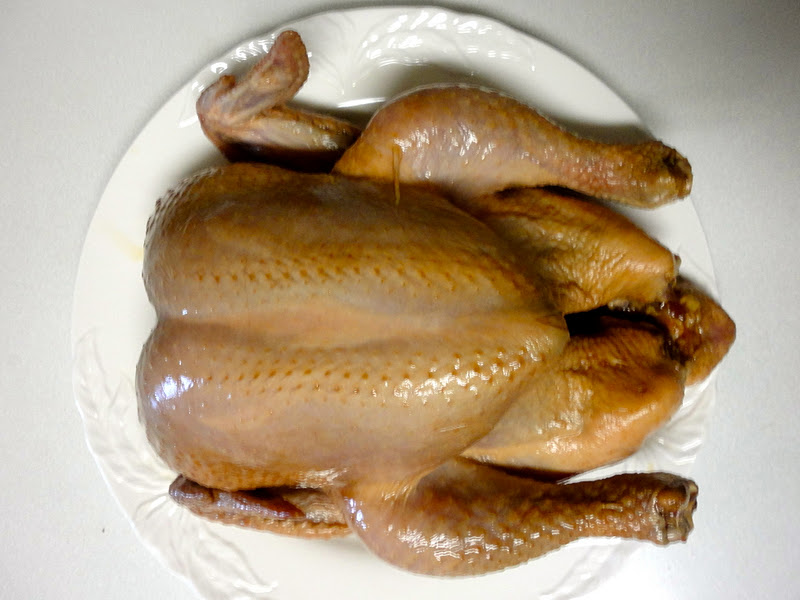
The next morning, mix the Skin Coating ingredients well in a small bowl. Take the chicken out of the plastic bag, discard the garlic and ginger in the cavity and scald the chicken with hot boiling water by pouring the water all over the chicken (this will remove the Marinade on the chicken skin.) Air dry the chicken for about 30 minutes at room temperature or until the skin surface is no longer wet. You can turn on a fan. Rub the Skin Coating mixture evenly on the chicken skin. Continue to air dry for about 3 hours. Turn the chicken over to air dry both sides.

Heat up the oven to 400 Degrees F. Place the chicken in a roasting pan (at the lower rack) and roast for about 12-15 minutes on one side and then turn to the other side. Roast for about 45 minutes or an hour, until the skin turn nicely brown or golden brown. Remove from the oven, let cool a little bit, cut up and serve immediately. Save the juice from the chicken and serve with steamed rice topped with toasted almond slivers to taste.
Bea’s Note:
If the chicken browns too fast in the first 12-15 minutes, cover the chicken with a layer of aluminum foil and uncover it towards the end so the skin doesn’t get too dark too quickly.
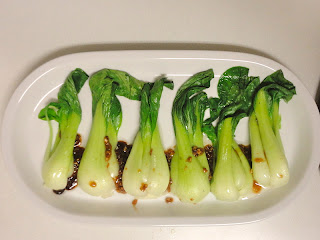
Recipe for Baby Bok Choy with Oyster Sauce adapted from Rasa Malaysia
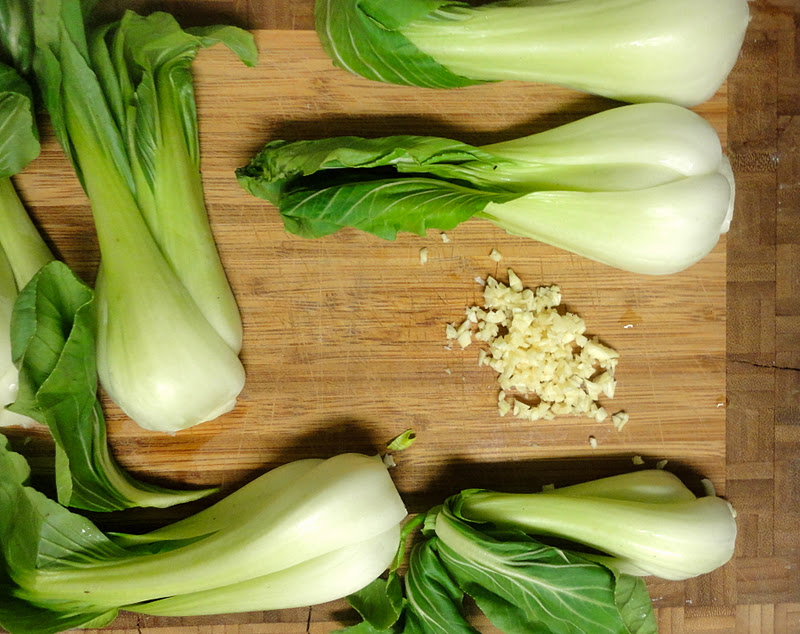
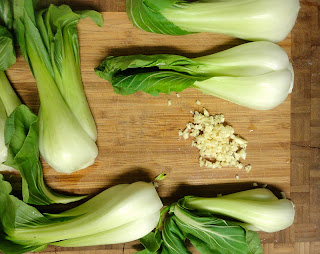
6 baby bok choy
1 tablespoon oyster sauce
1 tablespoon water
1/4 teaspoon cooking oil
1/2 teaspoon sugar
2 dashes of white pepper
For the Garlic Oil:
2 cloves garlic (finely chopped)
1 teaspoon oil
1 teaspoon oil
Method:
Prepare the garlic oil first by heating up your wok and stir fry the minced garlic until they turn light brown. Dish out and set aside.
Prepare the garlic oil first by heating up your wok and stir fry the minced garlic until they turn light brown. Dish out and set aside.
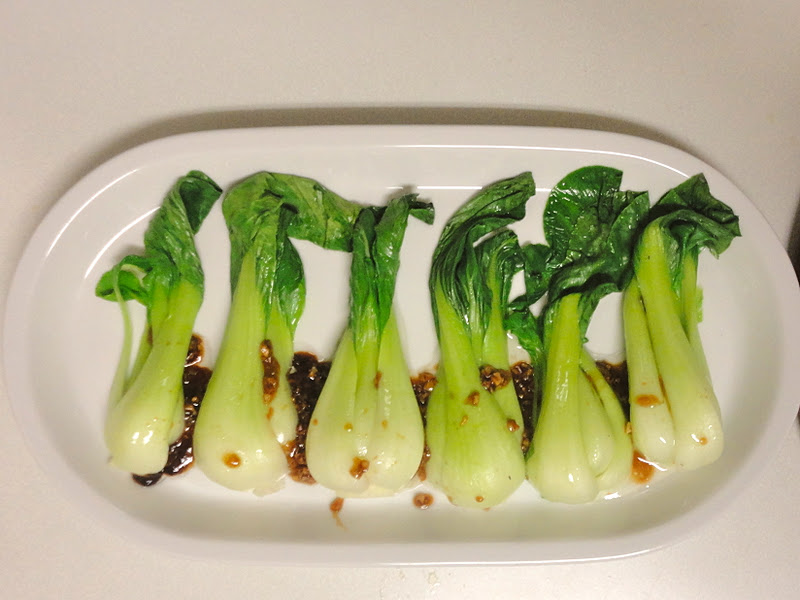
Heat up a pot of water and bring it to boil. Add two small drops of cooking oil into the water. Drop your vegetables into the boiling water and quickly blanch them for about 20-30 seconds (depends on the quantity). As soon as they turn slightly wilted, transfer them out and drain the excess water off the vegetables. Arrange the vegetables on a plate.
In a wok or large skillet, heat up the cooking oil, and then add the oyster sauce, water, sugar, and white pepper powder. As soon as the sauce heats up and blends well, transfer and drench it over the blanced vegetables. Top the vegetables with the garlic oil and serve immediately.
Cook’s Note:
For the garlic oil, the garlic will continue to cook in the oil so as soon as they turn light brown in the wok, you should dish it out. Eventually, they will turn golden brown.