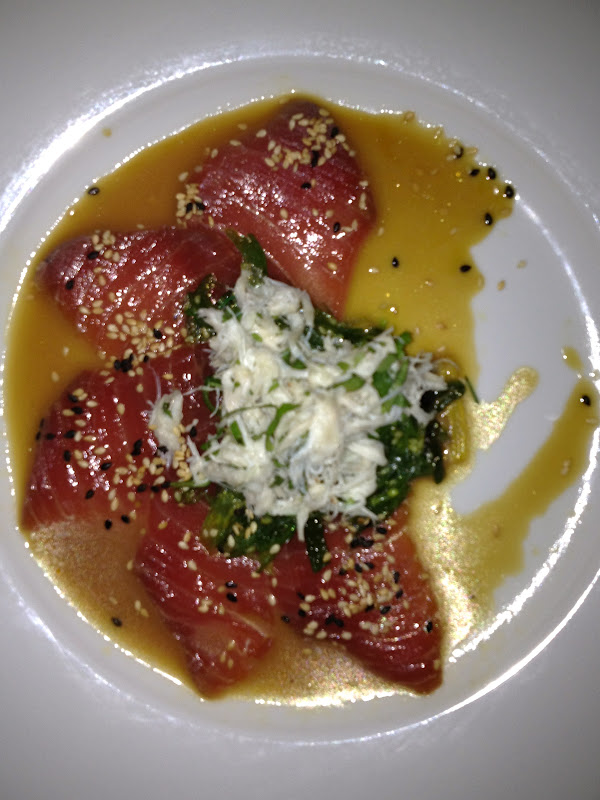
 |
| Bonito’s Version of Tiradito de Thon |
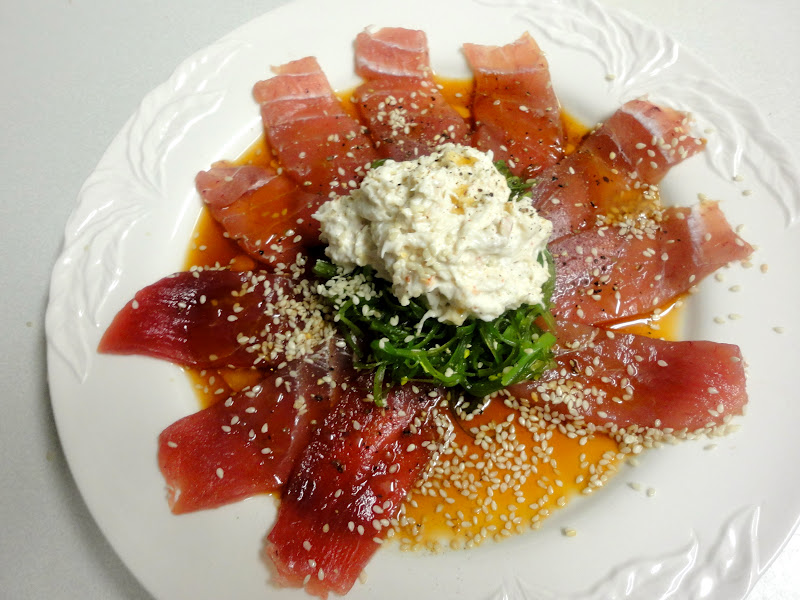 |
| And mine… |
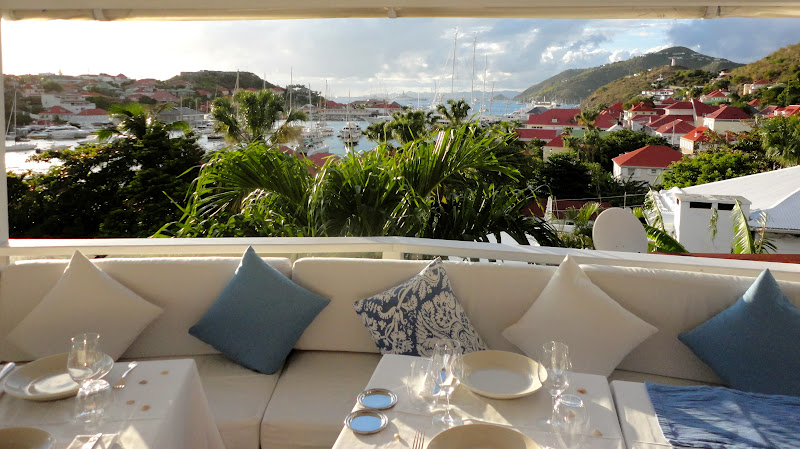 |
| Unfortunately, mine didn’t come with this view from Bonito |
 |
| Rue Lubin Brin Gustavia, St. Barthelemy FWI (590)0590-279-696 www.ilovebonito.com |
Silken fish coated in citrus and soy, the earthy nuttiness of sesame oil, the sweetness of crabmeat and the crunch of perfectly dressed seaweed salad, that’s the explosion of taste that left me, a month later, wistful for another plate of Tiradito of Tuna. In my earlier post, “15 Things you really must eat in St. Barth”, I promised that I would share the recipe for the fantastic “ceviche” we ate at Bonito, a wonderful hillside restaurant overlooking Gustavia’s beautiful harbor. And the food at Bonito is every bit as magnificent as the view. The well-travelled chef, Laurent Cantineaux, has brought influences from all over. Chef Cantineaux has worked at Daniel, here in New York, for Guy Savoy and the Troisgros brothers in France and then landed in Caracas, Venezuela where he was the Executive Chef at Café Atlantique. There must have been a side trip to Peru at some point because Peru in the birthplace of the Tiradito. Without question, Chef Cantineaux’ tiraditos are reason alone to head directly to Bonito right after you’ve touched down in St. Barth.
 |
| Chef Laurent Cantineaux in his kitchen at Bonito |
“No son carpaccios, no son sashimis, son Tiraditos!!!” proclaims the menu. And you will undoubtedly agree – they are unique. Ceviche itself, is the national dish of Peru: Ceviche is the act of ‘cooking’ raw fish in lime or lemon juice. The Tiradito is distinct from Peruvian ceviche which dates all the way back to the Incas. The tiradito owes its existence to a far more recent group of Peruvians, the Japanese. In 1899, concerned about over population, the Japanese government actively recruited people to emigrate from Japan. One recipient of this out-migration was Peru. It’s estimated that some 33,000 Japanese came to Peru in a 40 year period. The Tiradito did indeed evolve from sashimi. And unlike traditional Peruvian “cebiche” which is made of uniform squares of fish, the Tiradito allows every fish to be cut in a different form to take advantage of its texture and flavor. Chef Cantineaux crafts his out of wahoo, salmon and the one I share with you today, Tuna.
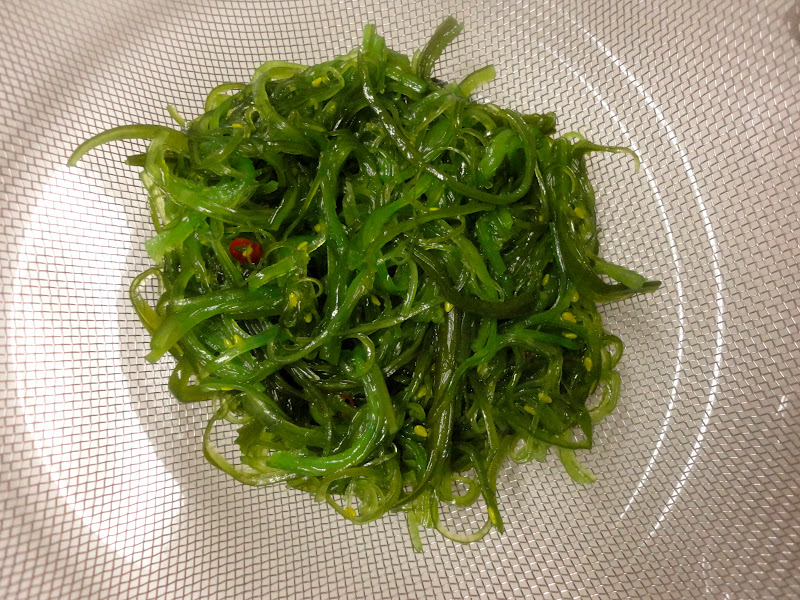 |
| Seaweed Salad or Hyashi Wakame |
Putting your own “Tiradito de Thon” is extraordinarily easy as I discovered. The elements include beautiful slices of Sushi-grade dish tuna, which lie on a bed of Ponzu, the citrus flavored soy sauce that’s quite readily found in supermarkets. Slightly harder to find may be the Seaweed salad or “Hiyashi Wakame” which is then put centerplate over the tuna. I am sure that you can find it any Asian market, which is where I got mine. It is sold frozen and already dressed with sesame seeds and sesame oil, sugar, salt and chili oil. Topping the crunchy, delicious seaweed is a mound of lump crabmeat which I made creamy with sour cream and give a little heat to with some red pepper flakes. Toasted sesame seeds are showered over the whole dish and then a little sesame oil is drizzled over the fish. The whole thing is ready in minutes. All I can tell you about how good we thought our home version was to tell you this: Andrew expressed great disappointment that if I blogged about it, we wouldn’t enjoy this dish ever again. Fat Chance! I won’t let that happen. And if by any chance it does, we’ll be back at Bonito again next year. Here’s the recipe for 2.
Recipe for Peruvian-style Teraditos:
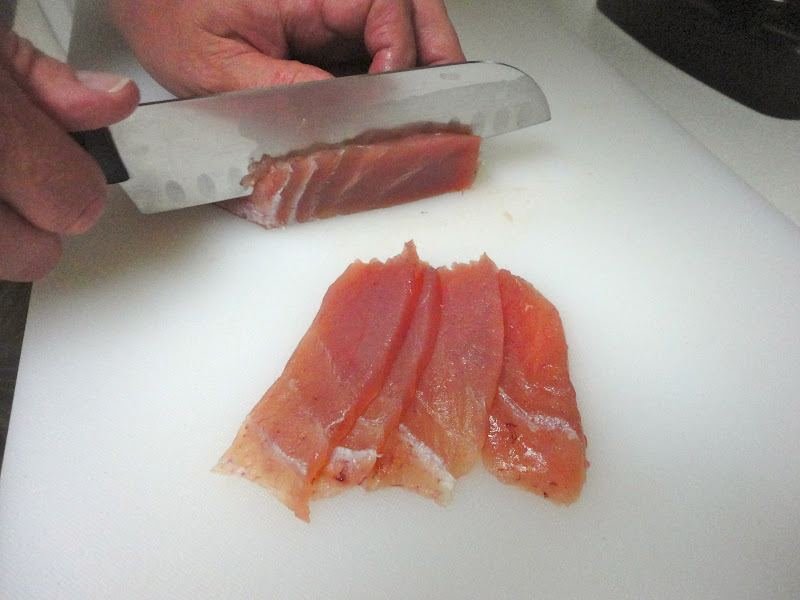
½ lb Sushi Grade raw Tuna
½ cup per person Seaweed Salad (Hiyashi Wakame)
¼ lb. Fresh Lump Meat Crabmeat
1 tbsp. Sour Cream
1 tsp. Red Pepper Flakes ( I like to use Aleppo Red Pepper flakes)
1 tbsp. white Sesame seeds
1 tbsp. black Sesame seeds
Ponzu Citrus Flavored Soy Sauce
Soy Sauce
Sesame Oil
Freshly ground Black Pepper
Defrost the frozen seaweed salad for several hours before making your Tiraditos. Any extra (and unless you are making these for a crowd, there will be extra) can be re-frozen and kept for up to two years(!)
Before you start to make this dish, place the tuna in the freezer for 10 to 15 minutes.
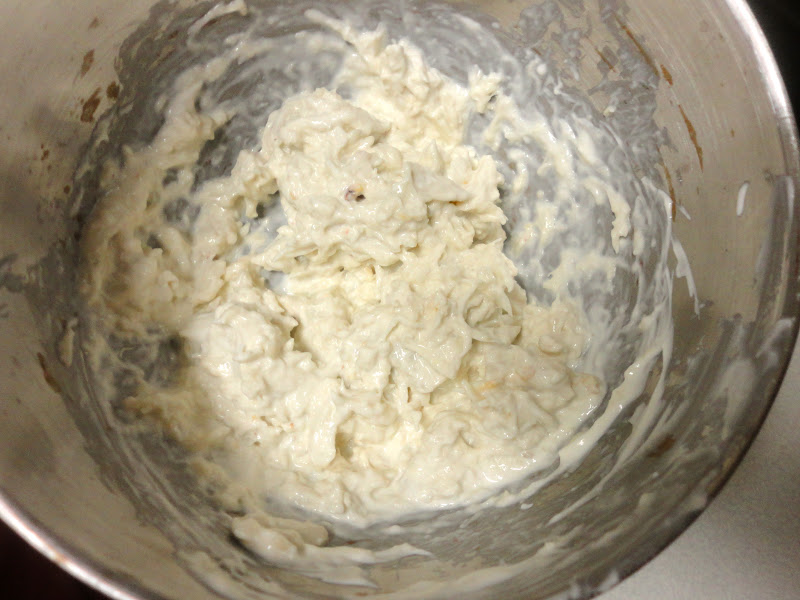
3. Make the Crabmeat mixture in a small bowl. Stir the sour cream into the lump meat crab then add the red pepper flakes and stir again. Set aside.
4. Toast the white sesame seeds in the toaster oven, watching carefully to make sure they do not burn.
5. Coat the plates you will be using with enough Ponzu to cover the bottom of the plate.
6. With a sharp knife, cut the tuna into pieces about 1/8 inch thick.
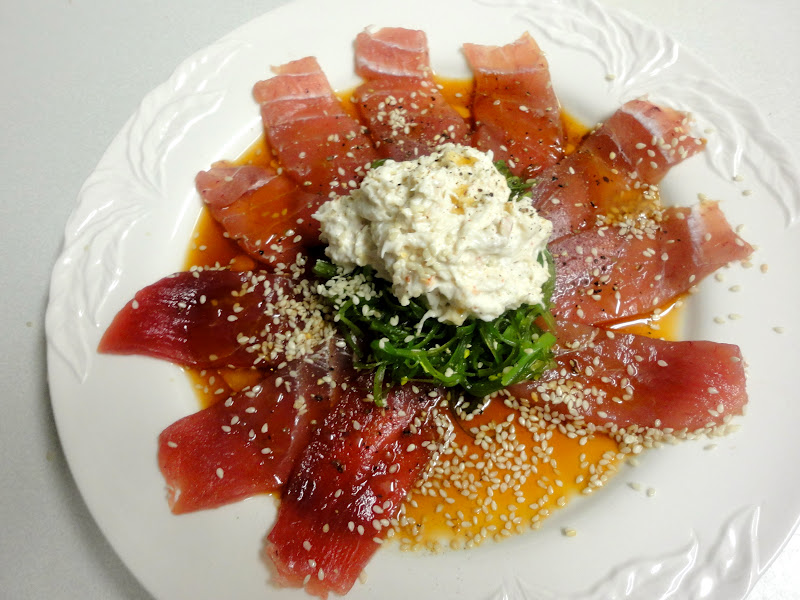
7. Arrange the slices on the plates. In the center of each plate, place about ½ cup of seaweed salad. Divide the crab meat and place a generous portion atop the seaweed. Take the sesame seeds and shower your plates with 1 tsp of toasted white sesame seeds and 1 tsp. of black sesame seeds. Carefully drizzle soy sauce over the fish. In drops, put sesame oil over the fish. Grind some fresh black pepper and top the crab mixture with it. Serve at once.