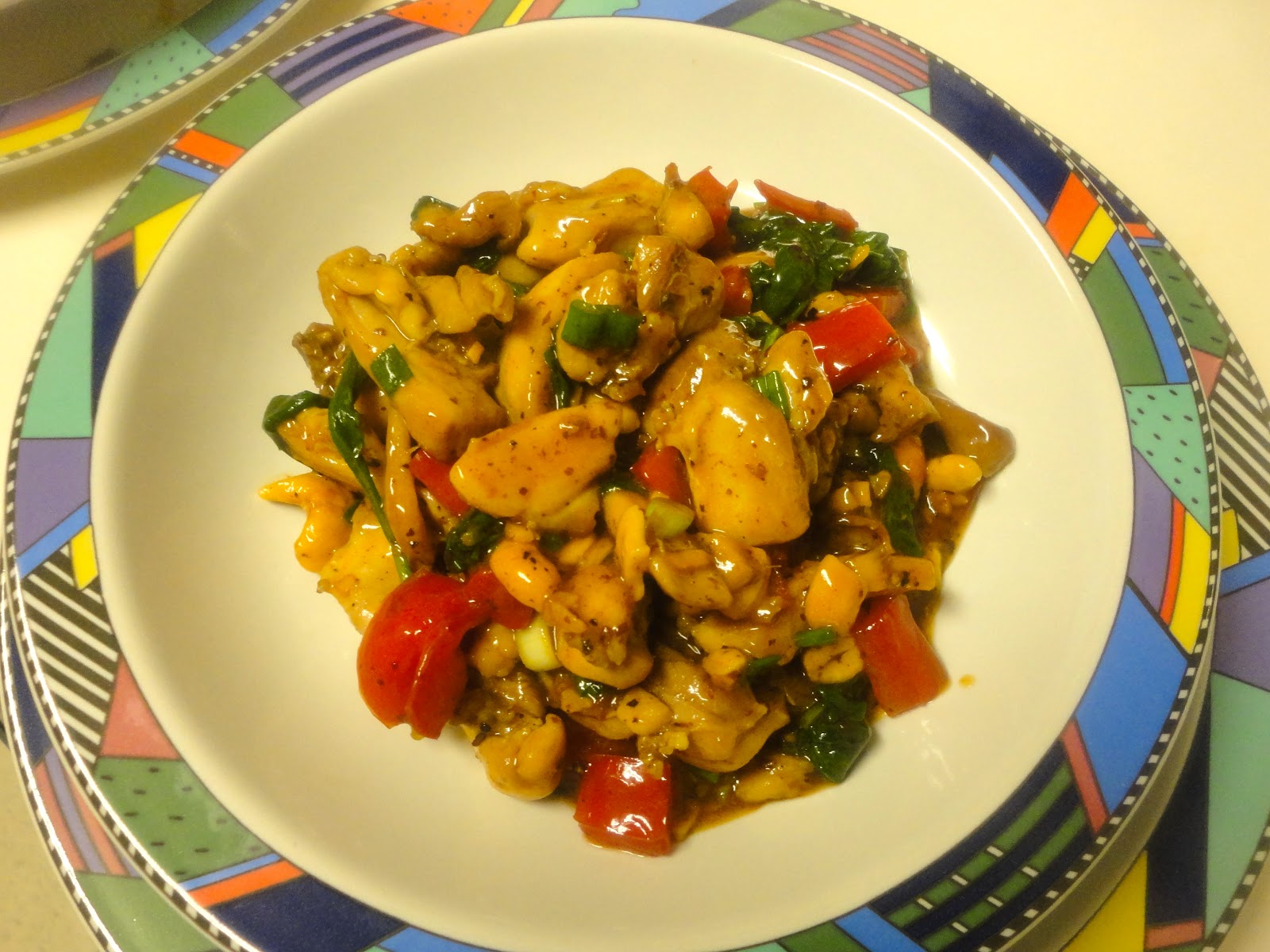
Chicken, Cashew and Spinach Stir-Fry adapted from Gourmet Magazine
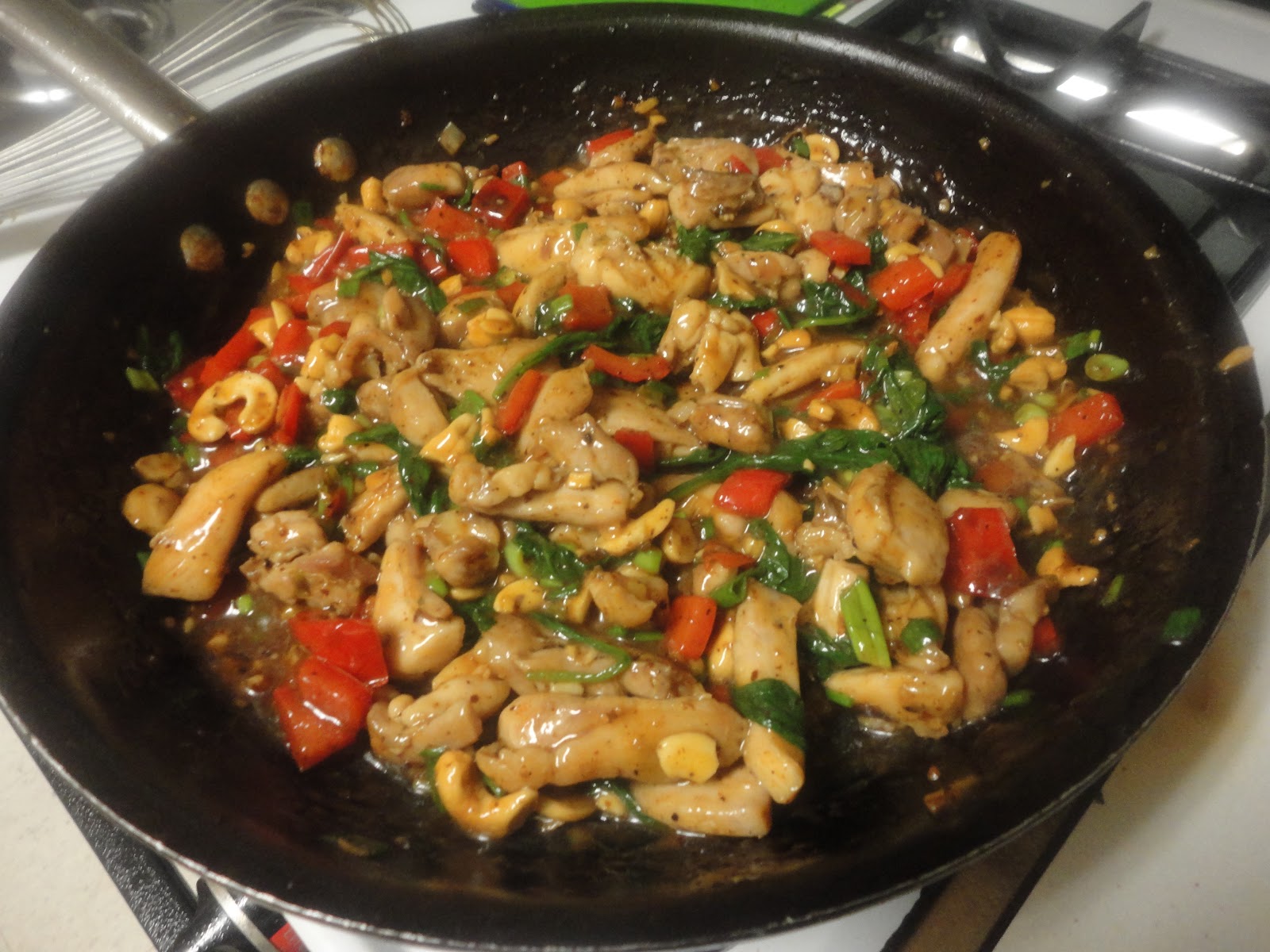
If I could teach one technique that is perfect for weeknight cooking, it would be the stir-fry. It is the absolutely ideal last minute dinner when you’re not entirely sure when everyone’s getting home. You put everything in place in advance. Then, when whomever you are cooking for arrives at the door, you’re ready to have dinner on the table in moments. In the case of this Asian inspired version of a stir-fry, the cooking time adds up to all of 12 minutes max. That’s kind of hard to beat. And hard to beat too are the flavors and textures of this dish. The tender chicken, the crunch of the cashews and red pepper, a hint of spice from the red pepper flakes, the green of the spinach—they all come together in a silken sauce that’s better than any Chinese take-out. Come to think of it, if you ordered Chinese, it would probably take longer to get to you than this dinner does. You’ll notice that I served this dish without any sides. The obvious choice would be a bed of fluffy white rice. But we sometimes skip the carbs and then of course, there’s the matter of Arsenic in Rice.
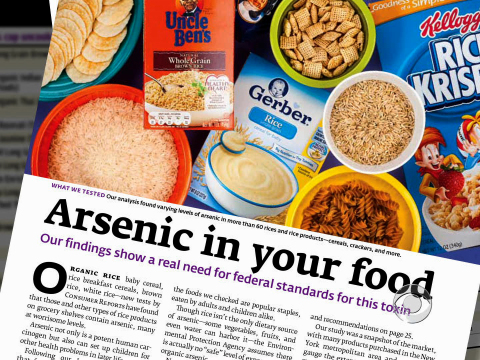
Having lived through the time when Swordfish was off the menu because of mercury poisoning, the news that Rice contains Arsenic might have been greeted with a shrug. But this news is terrible. “Consumer Reports” did an exhaustive study of 60 different rice products, from infant cereals to rice pastas even rice drinks. Their conclusion: Eating rice once a day can increase arsenic levels in the body by at least 44{4e4771bbe073b579fdd8e596ee487f65145483febbc8ba0a80525f62b26cad86}. Now the defense of this shockingly high number is that this is inorganic Arsenic. How that is supposed reassure anyone when Inorganic Arsenic is a class 1 carcinogen capable of producing lung, liver and bladder cancers is a little hard to understand.
On the national news the other night, a very taut spokeswoman for the Rice Council did her bit to assuage the terror her audience undoubtedly felt. It was sort of like listening to a spokesperson for the Tobacco Companies. “Rice has always been considered a nutritious food and an important part of a healthy diet,” the USA Rice Federation spokeswoman parroted, “We’ve been made aware of concerns about the level of arsenic in rice, but are not aware of any established studies directly connecting rice consumption and adverse health effects.” And we’re sure they’ll be able to hire people like Jim Coughlin, an “independent” toxicologist who has consulted for the USA Rice Federation in the past. He is quoted as saying: “The levels are low. If we’re going to eat, there’s going to be arsenic in all our foods. It’s found in fruits, vegetables and grains, and rice falls in the category. You’ve got to eat, and I think rice is a safe and nutritious food.” He thinks? I think we need a little more science than that.
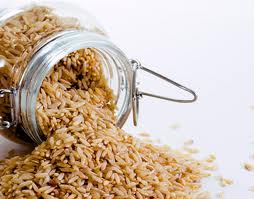
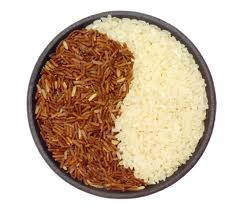
What can we do while the Food and Drug Administration Consumer Reports finish collecting and analyzing more than 1,200 samples of rice products by the end of the year? Once the samples are analyzed and completed, the FDA will determine if additional recommendations are needed. Meanwhile, my dear friend Kristi has just tossed out all her Brown Rice. I confess to a certain Schadenfreude in hearing that white rice had lower levels of arsenic compared to the brown stuff. For years we were led to believe that brown rice was far superior to white. (Nutritionally, it still is.) But Arsenic is most prevalent in the outer layers of the grain. White rice is ‘polished’ removing some of those layers. But don’t cheer yet. The Consumer Reports study found that rice grown in Arkansas, Louisiana, Missouri and Texas generally had higher levels of arsenic. Those are four of the six states that produce virtually all the rice in this country. Only Missippi and California are missing from that list. Now how does the arsenic get into the rice in the first place? Apparently arsenic in now-banned pesticides lives on in the soil for 45 years and these pesticides were only banned in the ’80s. And the reason rice contains so much more arsenic than other crops is because it is grown in arsenic-tainted water as well as arsenic-polluted earth. So for years to come, rice will still contain arsenic. And there are people who want to close down the Environmental Protection Agency!
Until the FDA makes its recommendations, it might be wise to hear what the whistle-blowers at “Consumer’s Report” recommend:
1. Arsenic can be reduced by rinsing and then boiling rice in a 6 to 1 water ratio which will remove about 30 percent of its arsenic.
2. People should eat no more than two servings of a quarter-cup of dry rice a week.
2. For children under 5, the group advised against drinking rice drinks as part of their daily diet.
3. They also recommended no more than one serving of infant rice cereal a day for babies.
Now back to our stir-fry: Here’s the recipe and I can say with confidence that you will never miss the rice.
Recipe for Chicken, Cashew and Spinach Stir Fry adapted from Gourmet Magazine
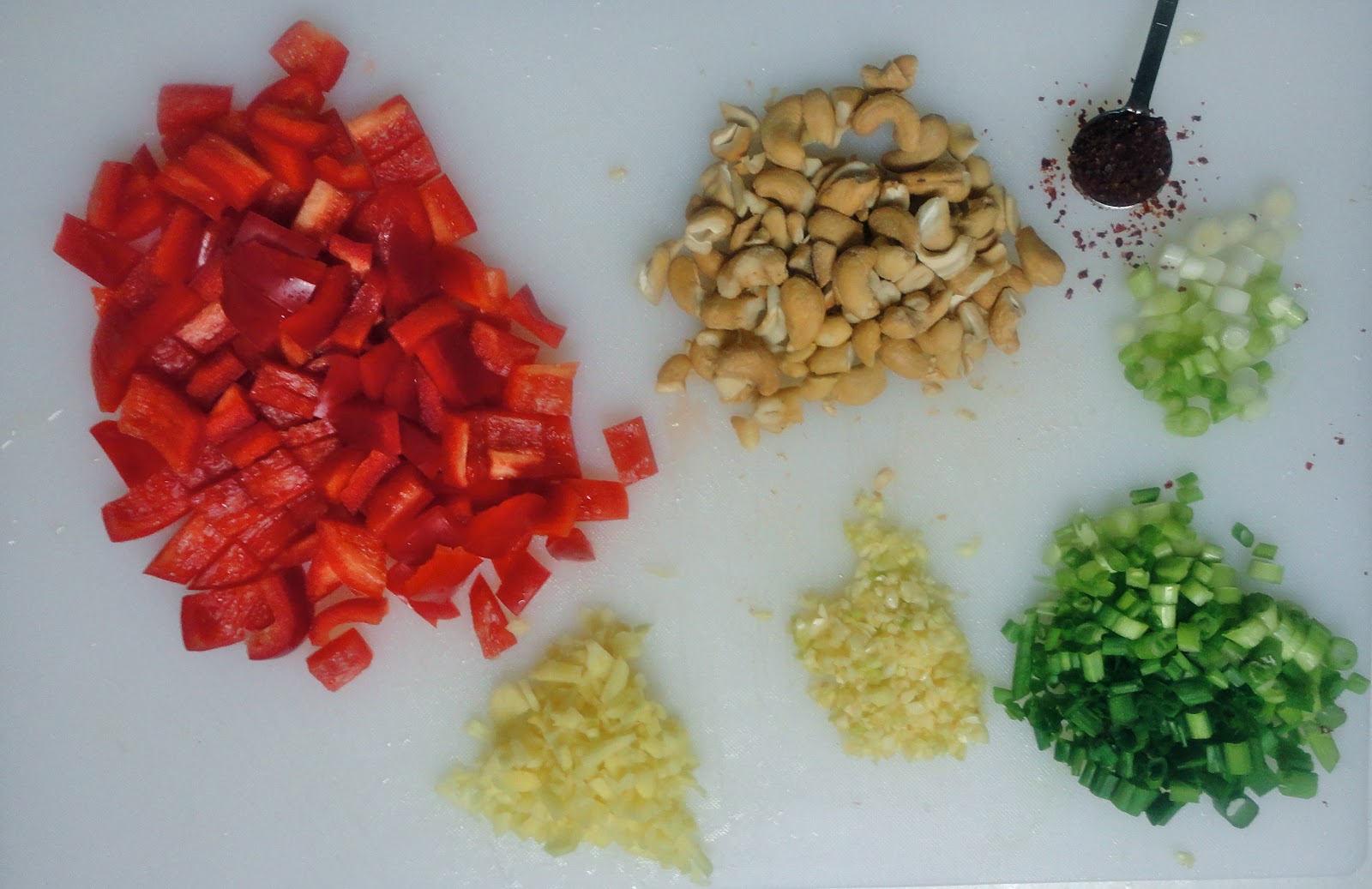
Chop scallions, separating white and green parts. Pat chicken dry, then cut into 3/4-inch pieces and toss with salt and pepper. Heat a wok or 12-inch heavy skillet (not nonstick) over moderately high heat until a drop of water evaporates immediately. Add oil, swirling to coat, then stir-fry chicken until golden in places and just cooked through, 4 to 5 minutes. Transfer to a plate with a slotted spoon.
Add bell pepper, garlic, ginger, red-pepper flakes and scallion whites to wok and stir-fry until peppers are just tender, 5 to 6 minutes.
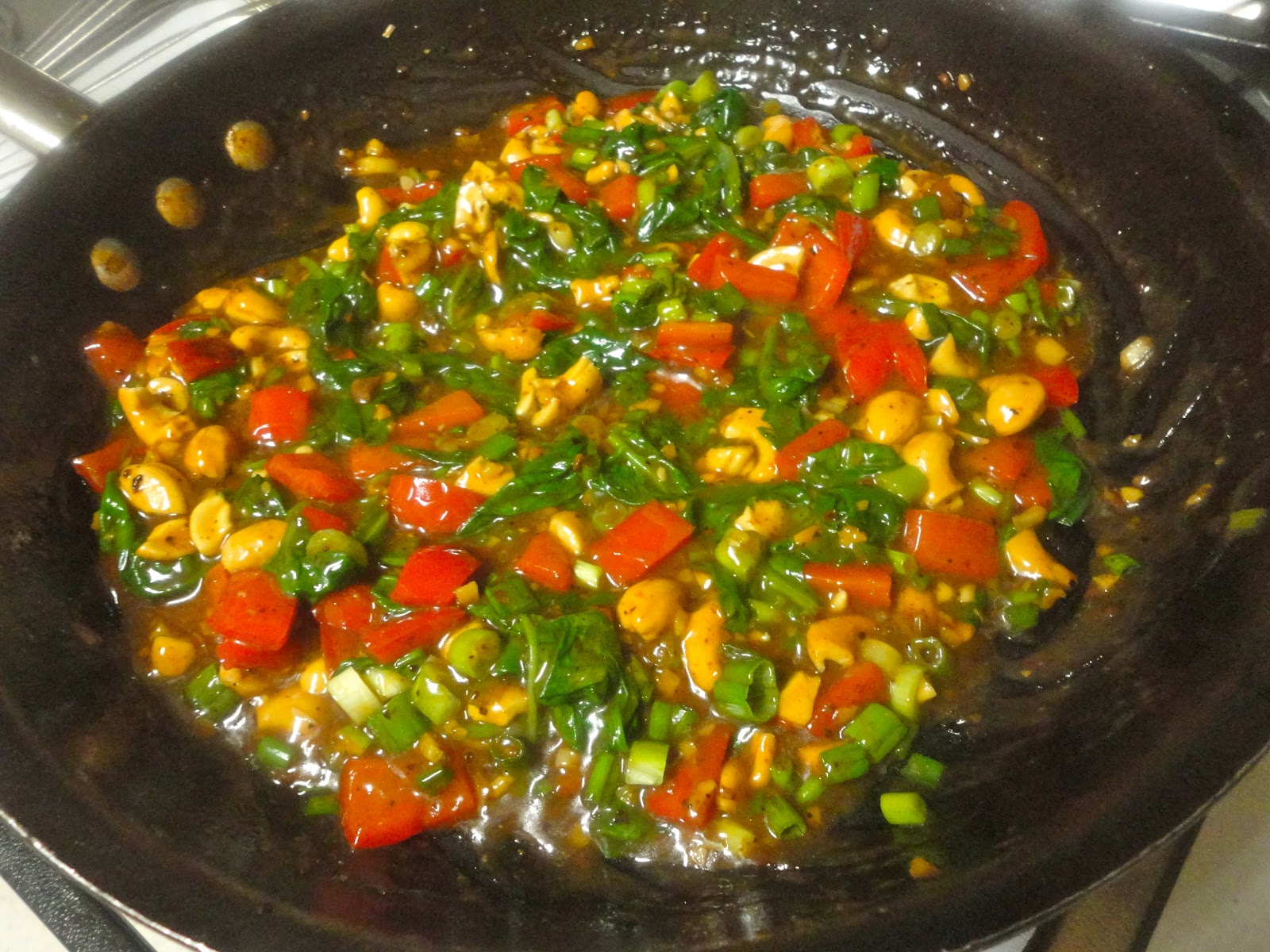
Stir together broth, soy sauce, cornstarch, and sugar, then stir into vegetables in wok. Reduce heat and simmer, stirring occasionally, until thickened, 1 to 2 minutes.
Stir in cashews, scallion greens, spinach and chicken along with any juices accumulated on plate. Wait until spinach has wilted and then serve over rice if you would like.
A very interesting question and here is what I could find out.
Dr. Philip Landrigan, a pediatrician at New York's Mount Sinai School of Medicine was quoted on WCBS-TV in New York as saying: "When there was cotton there they had to treat the cotton with arsenic pesticides to control the bowl weevil," he said. "Now a century later, that arsenic is still in the soil, the rice is very effective at pulling it out of the soil in and it concentrates in the rice." Arsenic causes lung, skin and bladder cancer, Landrigan said. He added that arsenic is also very harmful to babies' brain development. If a baby is exposed to arsenic in the womb because the mother is eating arsenic or if a baby ingests arsenic in the first months of life in cereal, rice milk or other food, the arsenic could interfere with brain development, reduce the child's intelligence, and cause behavioral problems. Landrigan recommended in the coming months and years that parents avoid rice altogether or just rice that was grown in Texas, Louisiana, and Missouri. "Stay with California rice, stay with Asian rice or when in doubt go with barley, go with oatmeal," he said. "The smart thing to do is to be concerned and not do it. … Just avoid the rice." Asked about adults eating rice, Landrigan said it's smart to limit the amount of rice you eat, but that you don't have to cut it out entirely. He added brown rice often contains more arsenic than white rice because it contains the plant's shells.
So it would appear that eating Asian or California Rice is one way around the problem.
Dear Diana, I thank you so much for taking the time to write. Nothing is more infuriating to me than running into an improperly edited recipe–especially when the use of key ingredient is un-understandable. I have revised the recipe to make it clear when to add the spinach. Again thank you so much for your help in making this a better blog.
Thankyou. I apppreciate the quick response. I'll be cooking this tomorrow. Look forward to trying some of yourvother recipes as well. I will also see if you have a cookbook available. Thanks again.
Diana, if you like stir-fries I think you'll find this blog full of some very good ones. I am currently hard at work at our first cookbook which, believe me you will hear all about! Here's another stirfry that's similar to what you are making here…http://chewingthefat.us.com/2014/05/ginger-chicken-stir-fry-with-asparagus.html
Thankyou. Would you please send me an email when your book comes out, or add me to your mailing list if you have one. My email os [email protected] Thanks for thelink to the stir fry. I love to cook, and make most things from scratch. I don't normally buy many processed foods, and even make my own dressings. Thanks again.
I am delighted to add you to our subscriber list. I publish twice a week Mondays and Thursdays. I do my best not to use processed foods so I think you will find the recipes will meet your standards. Thank you again for writing. It makes my work worthwhile to hear from readers like you.
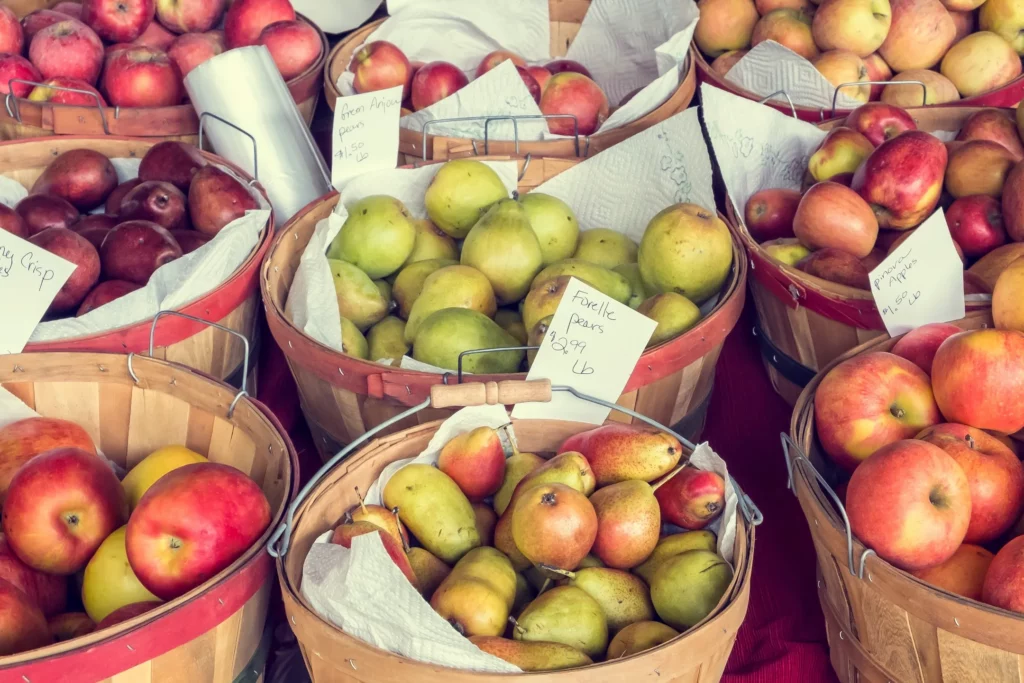
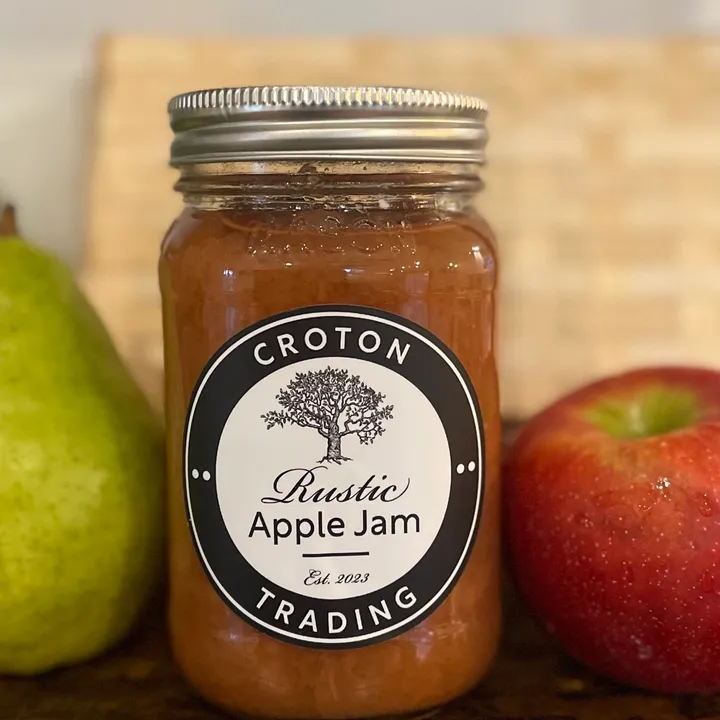
Did you know that New York State is the second largest apple producer in the whole country? Only Washington State tops us. Trust a resourceful friend of ours, Wendy Brovetto, native New Yorker and grandchild of an Upstate New York Farm family, to create truly incredible Rustic Apple Jams in 4 extraordinary flavors. When she did, Croton Trading Co. was born.
Wendy explains ”We created our apple jam after one of those overzealous days of apple picking yielded a larger-than-usual haul. With more apples than any family could consume, the experimenting began and gave way to what we think is the perfect blend of apples and cinnamon.”
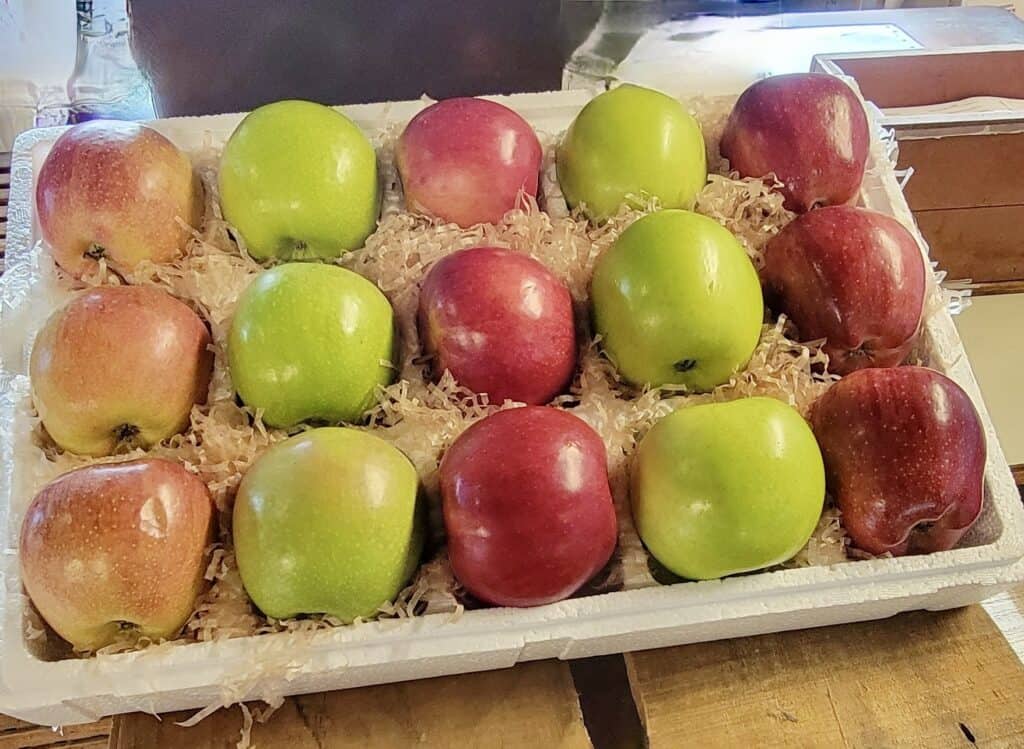
“We source our apples from local NY Orchards -- Thompson's Orchard in Westchester Co andl Richters Orchard on Long Island. I have a special fondness for these family-owned farms. Richters Orchard was a big part of my childhood, as my sistersand I would go on weekly outings with my dad to stock up on apples and cider"
"We carefully blend different apples to create our flavor profile and find inspiration from seasonal spices to create our Apple Jam”. Wendy proudly states.
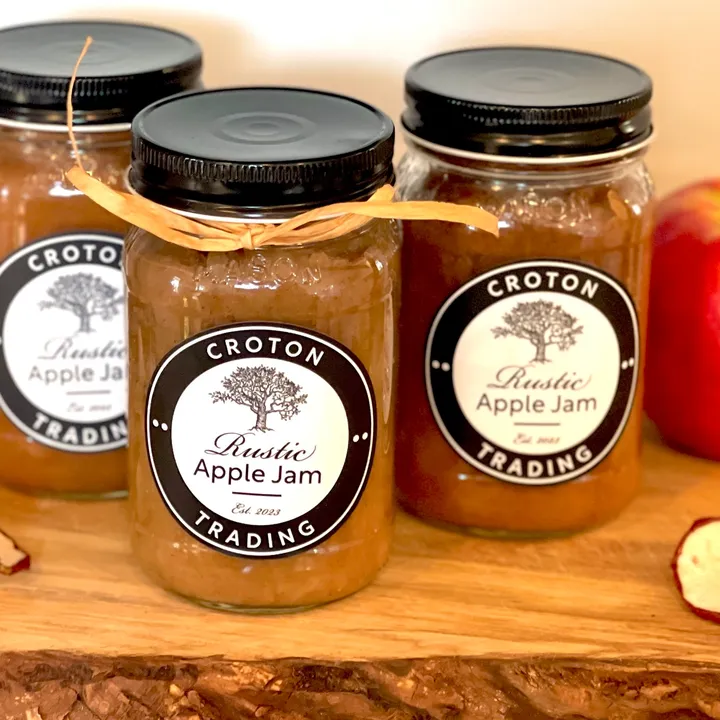
Now Croton Trading Company is up to 4 flavors: Fall Harvest Blend, Ginger Pear Fusion, Chai, and Brown Sugar. You can see the whole range here:
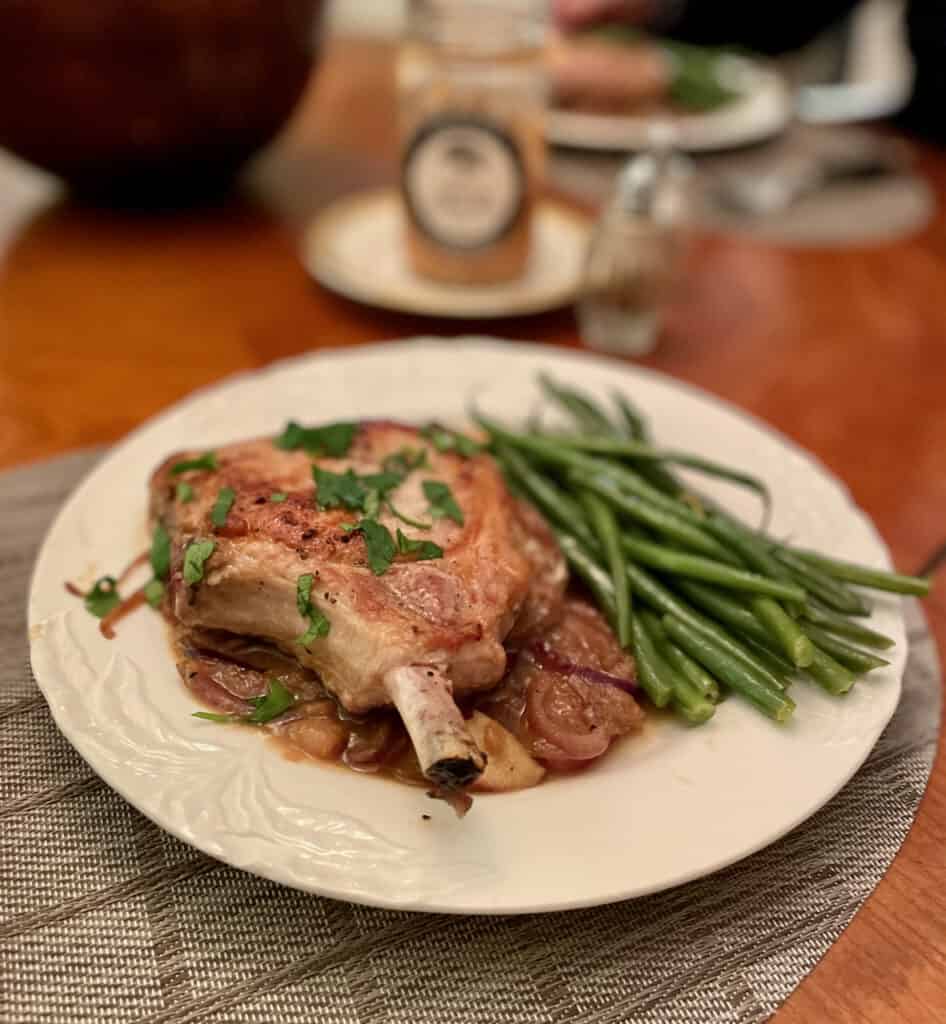
Needless to say, we couldn’t wait to put Croton Trading Company’s Apple Jam to work making our Skillet Apple Pork Chops. This one-pot recipe is perfect for weeknights but so good you may want to serve to company. The chops finish cooking in Croton Trading’s Apple Jam and we always serve it on the side to give even more great apple taste to the dish. Here’s the recipe:
1 ½ tablespoons olive oil, divided
4 (6-oz.) bone-in pork chops
¾ teaspoon kosher salt, divided
¾ teaspoon freshly ground black pepper, divided
½ cup unsalted chicken stock (such as Swanson)
1 cup Croton Trading Rustic Apple Jam (we used Ginger Pear)
1 tablespoon chopped fresh sage
1 ½ teaspoons chopped fresh rosemary
1 small red onion, thinly vertically sliced
Chopped Parsley for garnish.
Heat a large skillet over medium-high heat. Add 1 1/2 teaspoons oil to pan; swirl to coat. Sprinkle pork chops evenly with 3/8 teaspoon salt and 3/8 teaspoon pepper. Add pork chops to pan; cook 5 minutes on each side or until pork chops beautifully browned. Remove from pan. Set aside pan and drippings.
In a small bowl, combine stock and Croton Trading Apple Jam, stirring with a whisk. Set aside. Add remaining 1 tablespoon oil to pan with drippings, swirl. Add remaining 3/8 teaspoon salt, remaining 3/8 teaspoon pepper, sage, rosemary, and onion to pan; cook 4 minutes, stirring occasionally. Stir in stock mixture. Return pork chops to pan; cook 3 minutes or until liquid is reduced by half. Plate each chop individually. Top with chopped parsley as a garnish. Serve with plenty of Croton Trading Apple Jam on the side.
At Fervor, simplicity isn’t a compromise—it’s the point. There are restaurants you discover. And then there are the ones you think you’ve lost—only […]
Never miss a Post on Chewing the Fat. Sign up here!






Arsenic: What about eating Asian grown rice?
A very interesting question and here is what I could find out.
Dr. Philip Landrigan, a pediatrician at New York's Mount Sinai School of Medicine was quoted on WCBS-TV in New York as saying:
"When there was cotton there they had to treat the cotton with arsenic pesticides to control the bowl weevil," he said. "Now a century later, that arsenic is still in the soil, the rice is very effective at pulling it out of the soil in and it concentrates in the rice."
Arsenic causes lung, skin and bladder cancer, Landrigan said. He added that arsenic is also very harmful to babies' brain development. If a baby is exposed to arsenic in the womb because the mother is eating arsenic or if a baby ingests arsenic in the first months of life in cereal, rice milk or other food, the arsenic could interfere with brain development, reduce the child's intelligence, and cause behavioral problems.
Landrigan recommended in the coming months and years that parents avoid rice altogether or just rice that was grown in Texas, Louisiana, and Missouri. "Stay with California rice, stay with Asian rice or when in doubt go with barley, go with oatmeal," he said. "The smart thing to do is to be concerned and not do it. … Just avoid the rice."
Asked about adults eating rice, Landrigan said it's smart to limit the amount of rice you eat, but that you don't have to cut it out entirely. He added brown rice often contains more arsenic than white rice because it contains the plant's shells.
So it would appear that eating Asian or California Rice is one way around the problem.
You don't mention when you add the spinach in the cashew chicken recipe. It is mentioned in the ingredients, but not the instructions. Diana Lingholt
Dear Diana, I thank you so much for taking the time to write. Nothing is more infuriating to me than running into an improperly edited recipe–especially when the use of key ingredient is un-understandable. I have revised the recipe to make it clear when to add the spinach. Again thank you so much for your help in making this a better blog.
Thankyou. I apppreciate the quick response. I'll be cooking this tomorrow. Look forward to trying some of yourvother recipes as well. I will also see if you have a cookbook available. Thanks again.
Diana, if you like stir-fries I think you'll find this blog full of some very good ones. I am currently hard at work at our first cookbook which, believe me you will hear all about! Here's another stirfry that's similar to what you are making here…http://chewingthefat.us.com/2014/05/ginger-chicken-stir-fry-with-asparagus.html
Thankyou. Would you please send me an email when your book comes out, or add me to your mailing list if you have one. My email os [email protected] Thanks for thelink to the stir fry. I love to cook, and make most things from scratch. I don't normally buy many processed foods, and even make my own dressings. Thanks again.
I am delighted to add you to our subscriber list. I publish twice a week Mondays and Thursdays. I do my best not to use processed foods so I think you will find the recipes will meet your standards. Thank you again for writing. It makes my work worthwhile to hear from readers like you.