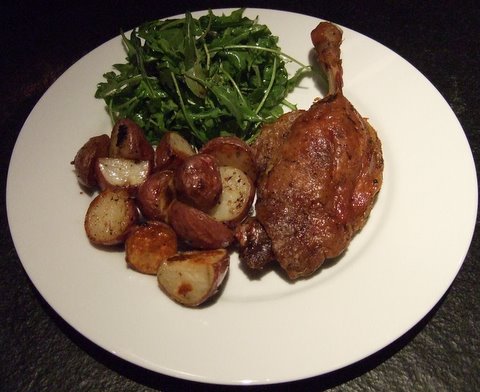
While we were making our Duck Confit, we got a call from Andrew’s sister, Lauren, asking us how we’d describe the difference between duck and chicken. We didn’t really have an adequate answer until we finished cooking this recipe and tasted this wonderful result. Duck cooked this way is richer, meatier and has so much more character than a chicken leg ever could.
We’d always saved Duck confit for a rare treat that we’ve reserved for restaurant visits since the recipe we knew called for copious amounts of very expensive duck fat and a very laborious cooking time. But when Melissa Clark, the New York Times recipe maven, put this recipe in the paper in January, we couldn’t resist. It still involves an overnight spice and salt mixture, and it takes 3 ½ hours time but the actual active cooking time is minimal. Do make extra confit because I’ll soon be posting a terrific Duck Confit Salad that will make a wonderful addition to your mid-week repertoire.
First, of course, there’s the matter of finding the duck legs themselves. This proved not to be much of a problem since Citarella stocks some very nice ones at about $5.00 a piece. I’ve heard they’ve been spotted at Fairway as well. But if you’re near neither of those places, you can order legs at https://www.emarkys.com/caviar/customer/home.php?cat=758
The original method for making Duck Confit is to cure them in spices and salt and then submerge them in duck fat and cook them very slowly until they emerge crispy and crunchy from the oven. But just imagine the amount of duck fat needed. That’s why Melissa’s recipe is such a godsend if you like Duck Confit that won’t bankrupt you.
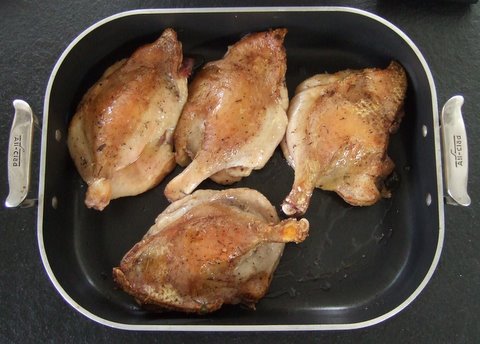
The recipe relies solely on the naturally occurring fat on the duck legs you’ll buy. You simply won’t believe how much fat is rendered in the cooking process! It’s actually kind of scary thinking “Was I really going to eat all that fat?” But remember, duck fat is actually healthier than butter…although it’s hardly on anyone’s ‘superfoods’ list. But save whatever’s left over and use it sparingly with the roast potatoes you serve with this dish. Save the rest for sautéing something bland…like chicken breasts. And serve the duck and potatoes with an arugula salad, as we did. The flavors seem made for each other. Here is the recipe:
Recipe for Duck Confit
1 1/2 teaspoons kosher salt
1/2 teaspoon dried thyme
1 bay leaf, crumbled
4 moulard duck legs (about 4 pounds total), rinsed and patted dry but not trimmed
Roasted potatoes, noodles and sturdy, bitter greens such as arugula, chicory and/or radicchio, for serving.
1. In a small bowl, combine salt, pepper, thyme and bay leaf pieces. Sprinkle duck generously with mixture. Place duck legs in a pan in one layer. Cover tightly with plastic wrap and refrigerate for 24 hours.
2. The next day, heat oven to 325 degrees.Place duck legs, fat side down, in a large ovenproof skillet, with legs fitting snugly in a single layer (you may have to use two skillets or cook them in batches). Heat duck legs over medium-high heat until fat starts to render. When there is about 1/4 inch of rendered fat in pan, about 20 minutes, flip duck legs, cover pan with foil, and place it in oven. If you have used two pans, transfer duck and fat to a roasting pan, cover with foil and place in oven.
3.Roast legs for 2 hours, then remove foil and continue roasting until duck is golden brown, about 1 hour more. Remove duck from fat; reserve fat for other uses.

4. Serve duck hot or warm, over roasted potatoes or noodles or sturdy salad greens.
Yield: 4 servings.










Monte,
Should you rub the herbs under the duck skin, or just on the surface? After they have cooked for two hours in the oven, do you flip them skin-side up for the last hour of uncovered cooking?
The herbs should be rubbed all over the duck legs, front and back. I wouldn’t try putting the rub under the skin as you need the duck legs to stay intact as they cook. You do not turn them over for the final the hour of cooking. After they are taken off the stovetop, they are skin side up the entire three hours in the oven. Enjoy!